
Summarize With AI


A sanctuary renovation plan is a structured approach to updating your worship space, covering everything from seating and layout to delivery, installation, and scheduling while keeping your services running without interruption.
Having a church renovation is one of the most meaningful investments your congregation will make. It is also one of the most logistically complex, requiring careful alignment of budget, design decisions, manufacturing timelines, and an active weekly service schedule.
Done right, your renovation project gives your congregation a more comfortable, beautiful, and accessible space.
Done without a plan, it can create weeks of confusion, cost overruns, and service disruptions your members will remember for years.
You don’t have to figure this out alone. The right partner turns a complicated church construction project into a clear, manageable process.
Key Takeaways
- Start your sanctuary renovation planning at least 12 to 18 months before your target completion date.
- Phase your work strategically so Sunday services can continue with minimal disruption.
- Work with a manufacturer who handles design, production, delivery, and professional installation as a single coordinated process.
- Confirm ADA-compliant and wheelchair-accessible pew placement before finalizing your layout.
- Always lock in your layout, wood finish, and upholstery selections early. Late changes extend your timeline.
- Custom church pews and furniture made in the USA typically offer better craftsmanship, lead times, and communication than overseas alternatives.
Where Should You Start with a Church Renovation Plan?
Start with your “why.” Before selecting materials, measuring rows, or calling vendors, your building committee needs to agree on the purpose of the renovation.
Ask yourself these questions:
- Are you adding seats?
- Are you improving comfort?
- Are you improving sightlines for a growing congregation?
- Are you accommodating wheelchair access?
Each of these goals shapes every decision that follows.
Once you’re aligned on purpose, document your timeline. Work backward from your target completion date and build in buffer time. Here are quick-start steps:
- Form a small project team (facilities manager, operations director, and one committee representative).
- Set a realistic budget range before vendor conversations begin.
- Identify your top two or three must-haves for the renovation.
- Choose a single point of contact on your team to manage vendor communication.
A realistic church renovation project management schedule accounts for design approval, manufacturing lead time, delivery logistics, and installation.
How Do You Phase a Renovation Around Active Sunday Services?
You phase it by section. Most active congregations cannot shut down their worship space for six to ten weeks. The good news is that you don’t have to.
A well-planned worship space planning approach divides the worship space into zones and works through one section at a time. Your congregation shifts seating temporarily, and services continue in the same space.
For larger projects, some churches schedule installation during lower-attendance seasons:
- Summer
- The weeks after Easter
- January
Coordinating your church furniture installation timeline around these windows significantly reduces the perception of disruption.
This is how phased installation typically works:
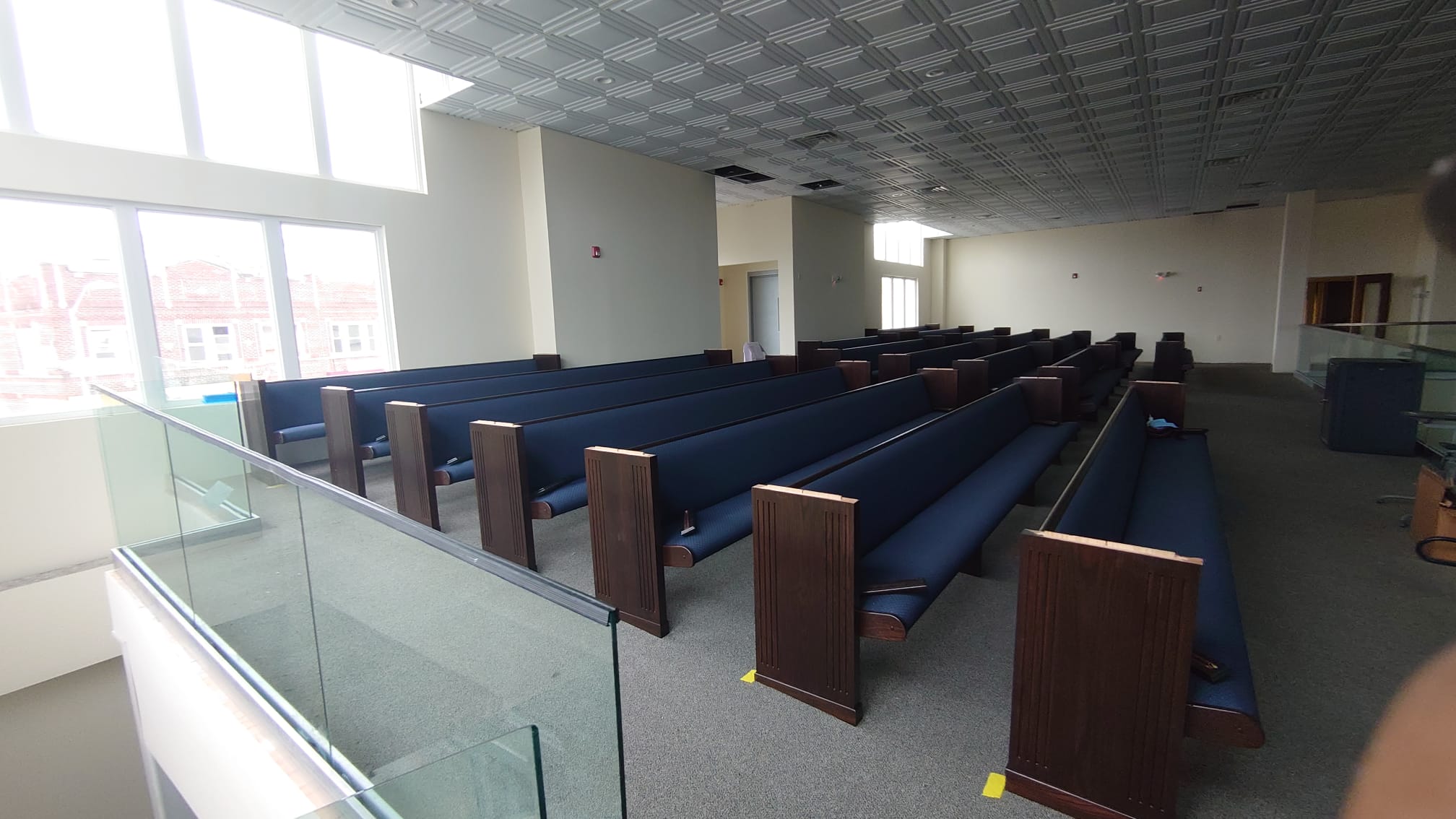
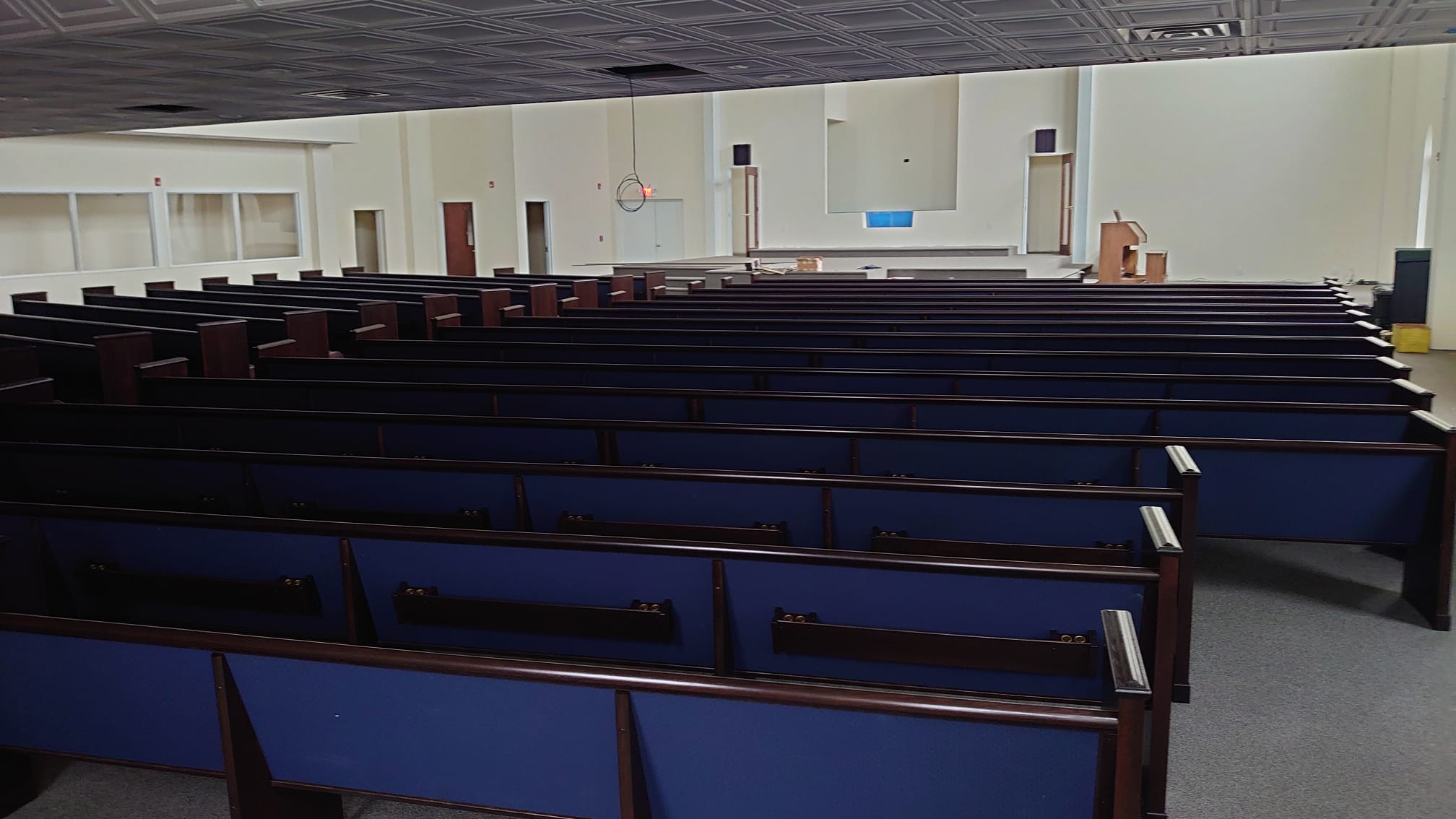
- Zone 1 (rear third of the sanctuary) is cleared, and new church pews or seating is installed.
- Congregation occupies Zone 2 and 3 during that phase.
- Work rotates forward as each zone is completed.
- Final touches, including anchoring, trim work, and accessibility spaces, are completed after all zones are set.
When you work with New Holland Church Furniture, your sales consultant helps you build this schedule from the start so nothing is left to guesswork.
What Is a Realistic Timeline for a Church Renovation Project?
For a full sanctuary renovation involving custom church pews, expect the following general timeline:
- Months 1 to 3: Initial planning, layout consultations, design approvals, and material selections (wood finish, upholstery fabric, pew style).
- Months 4 to 6: Finalized drawings, order confirmation, and manufacturing begins.
- Months 6 to 10: Production and quality review. Lead time varies based on the complexity of your order, whether you’re installing radius-curved pews, straight pews, or a combination of seating styles.
- Months 10 to 12: Delivery and professional installation, phased around your service schedule.
Timeline variables that affect your schedule include custom radius curves, ornate end panel designs, theater-style seating configurations, and the scale of your overall church construction project.
Starting early is the single most important thing your committee can do.
How Do You Choose the Right Church Furniture for Your Renovation?
You choose by matching seating to your congregation’s worship style, space shape, and long-term vision.
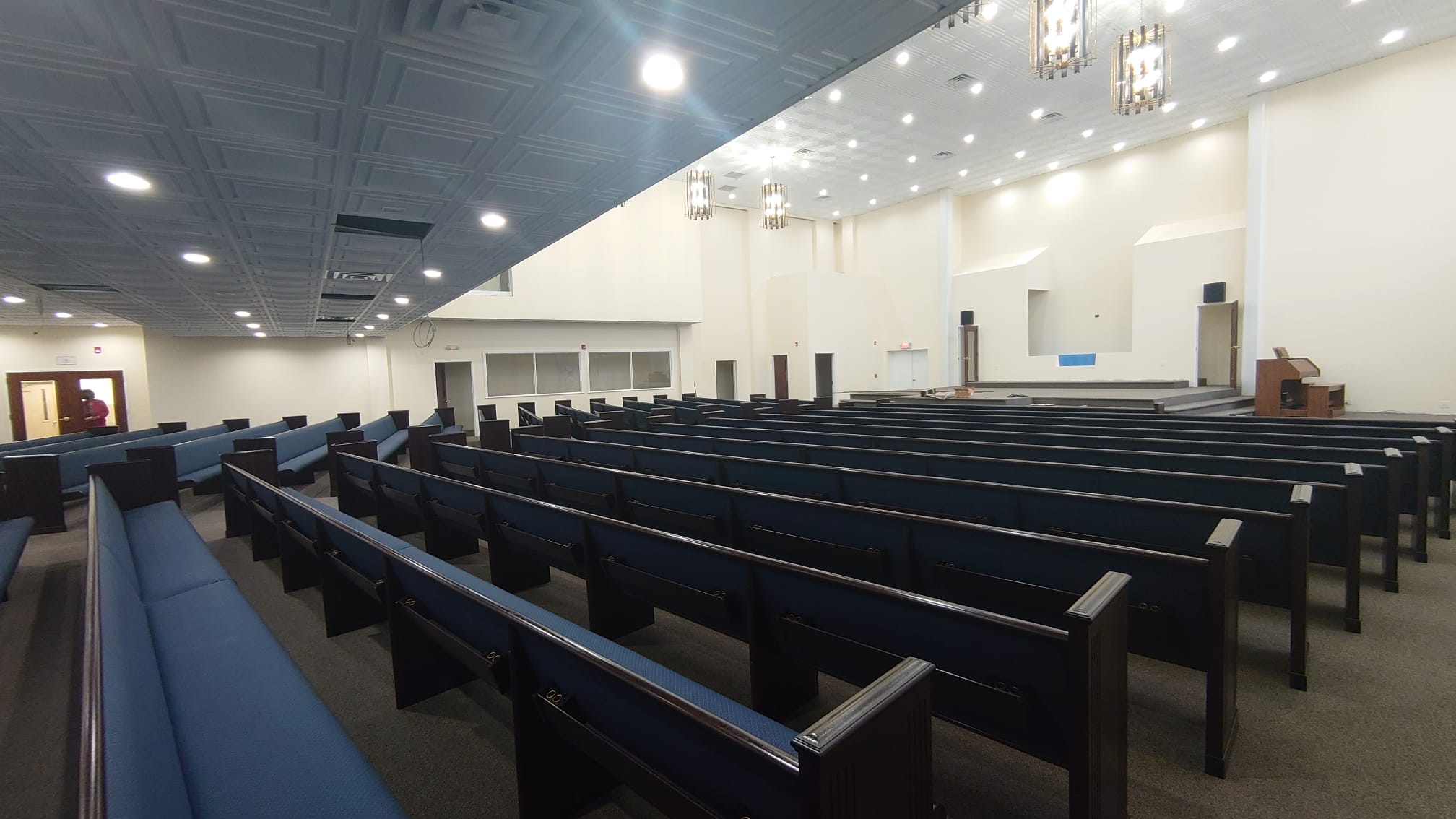
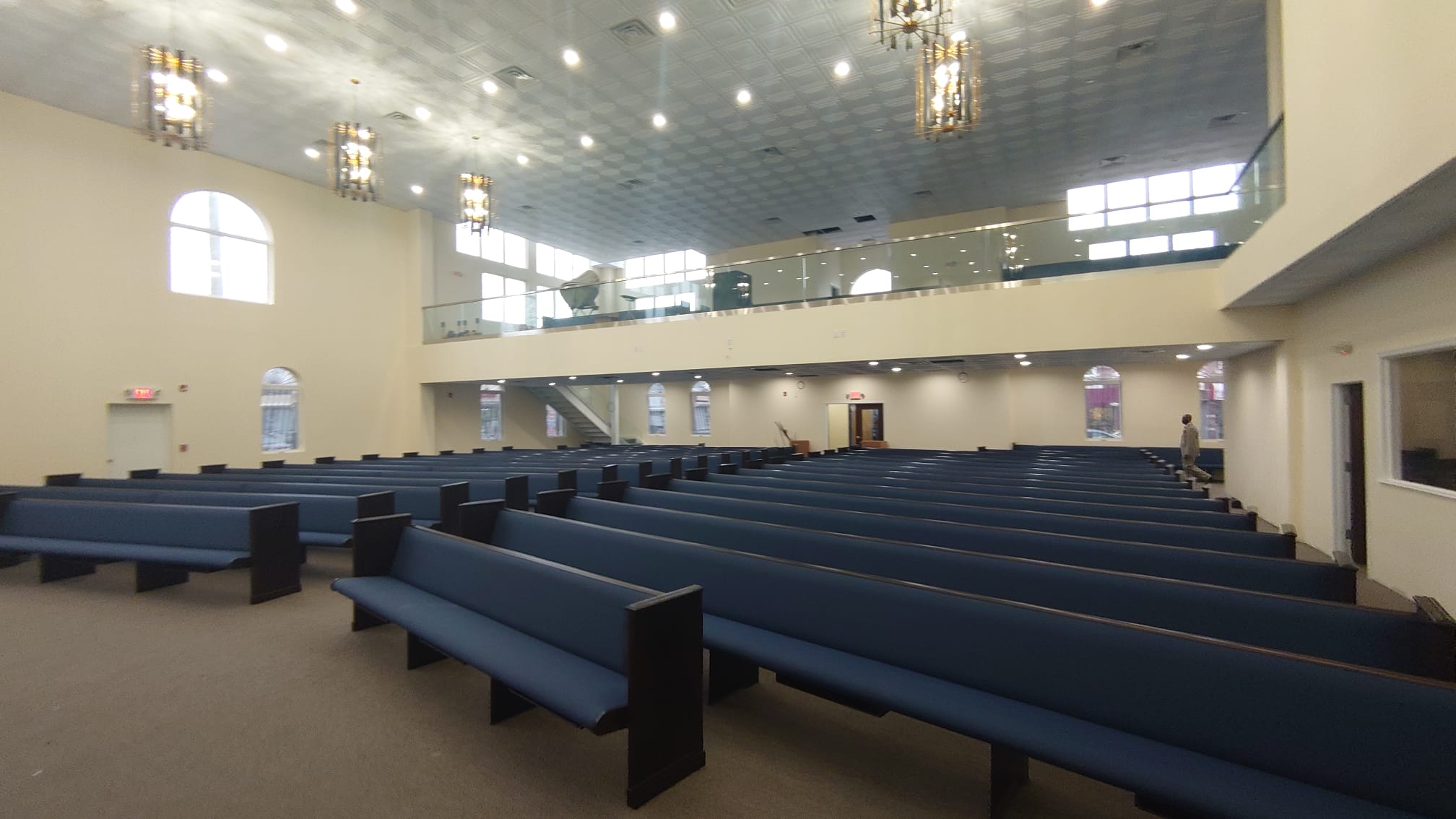
- Custom church pews remain the most popular choice for traditional and liturgical congregations. They create a defined, unified look that reinforces the sacred nature of the space.
- Upholstered pews add comfort without sacrificing the classic aesthetic.
- Ergonomic worship seating and flexible seating arrangements work well for congregations with growing families, balcony installations, or multipurpose worship areas.
- Theater-style seating can blend pew-style rows with individual ergonomic chairs, offering flexibility without visual inconsistency.
Here are some of your key selection factors:
- Wood species and finish: Options range from lighter oak tones to rich, dark mocha stains. Your choice should complement your flooring, wall finishes, and architectural details.
- Upholstery fabric: High-density foam and durable polyester blend fabric hold up under heavy weekly use. Ask about fabric durability, stain resistance, and cleaning recommendations.
- Pew style: Straight pews work in rectangular layouts. Radius-curved pews improve sightlines dramatically in fan-shaped or semicircular sanctuaries.
- Accessibility: ADA-compliant church furniture and dedicated wheelchair-accessible spaces are not optional. Handicapped seating must be positioned on a flat surface, and local code compliance is required. ADA requirements may also override local code standards.
At New Holland Church Furniture, we have been crafting worship seating since 1950 and have been the nation’s leading producer of radius-curved pews since 1962. Every piece is made in the USA, built with old-world craftsmanship and designed to last for generations.
What Happens During Professional Installation, and How Disruptive Is It?
Professional installation is far less disruptive than most committees expect, especially when it’s coordinated by an experienced manufacturer.
Here is what a professional church furniture installation process looks like with New Holland:
- Pre-installation coordination: Your sales consultant confirms the phasing schedule, staging areas, and any access restrictions before the crew arrives.
- Delivery and staging: Furniture is delivered and staged in the sanctuary according to your approved layout drawing.
- Assembly and placement: Straight pews are assembled on-site. Radius-curved pews are partially pre-assembled, shifting complex labor from the field to a controlled factory environment.
- Anchoring and final inspection: Every pew is leveled, secured to the floor, and inspected with a church representative before the crew leaves.
That kind of coordination is what separates an experienced manufacturer from a standard vendor.
Can You Restore or Refinish Existing Pews Instead of Replacing Them?
Yes. Before committing to full replacement, it is worth asking whether your current pews can be restored. Pew refinishing typically involves three steps:
- Evaluating the structural condition of your existing pews
- Repairing any damage to the wood or frame
- Applying a fresh stain and protective finish
If your pews are structurally sound but showing cosmetically worn, refinishing or reupholstering can significantly extend their life.
At New Holland, we also practice creative reuse, a process of producing something new from the old. This can mean restoring, reupholstering, or repurposing your existing seating when it still has usable life.
Ask your sales consultant:
- Can my current pews be refinished or reupholstered?
- Is creative reuse a practical option for my project?
- What does full replacement cost compared to restoration?
Not every renovation requires starting from scratch. A quick conversation with a New Holland sales consultant can help you understand your options and make the most informed decision for your congregation and your budget.
Ready to Plan a Renovation That Does Not Disrupt a Single Sunday Service?
A sanctuary renovation is one of the most meaningful investments your congregation will make. And it does not have to be overwhelming.
Here is your clear action plan:
- Align your committee on the renovation’s purpose and a realistic budget.
- Set your timeline early. Start planning at least 12 to 18 months before your goal date.
- Request a layout consultation. A professional review of your space identifies phasing opportunities and seating configurations you may not have considered.
- Review your existing seating before assuming full replacement is the only path.
- Confirm accessibility requirements early, so they are built into the design, not added as an afterthought.
- Connect with a sales consultant at New Holland Church Furniture to start mapping out your project.
Whether you’re managing a church construction project in Texas or coordinating synagogue seating in New York, our team at New Holland Church Furniture is here to be your guide from the first conversation to the final installed pew.
Find your local rep today and take the first step toward a worship space your congregation will be proud of for generations.