Summarize With AI


Buying new pews is rarely a simple “order and install” decision. It’s a long-term investment in comfort, accessibility, and the overall worship experience. And for anyone leading church seating procurement, the process can feel overwhelming fast. Budgets, measurements, timelines, and congregation expectations all collide at once, which can cause stress and anxiety.
That’s exactly why a clear church pew buying checklist matters. With the right checklist, it becomes easier to compare seating options, plan a sanctuary layout, and choose furniture that supports flexible use for years to come. Use this guide to move through each step of church seating procurement with confidence, while keeping durability, ergonomic worship seating, modular church furniture, and ADA-compliant church furniture front and center.
1) What’s the Goal Behind Your Church Seating Procurement?
Every successful project begins with clarity. Before selecting finishes or comparing costs, identify what’s driving the need for new seating. A strong church pew buying checklist starts by confirming the “why” behind the purchase.
Common reasons churches begin church seating procurement include:
- Existing pews are worn out, damaged, or uncomfortable
- A sanctuary renovation requires updated seating and improved traffic flow
- The church needs more flexible seating for multiple types of gatherings
- Leaders want ergonomic worship seating to improve comfort for longer services
- The worship space needs more ADA-compliant church furniture options
Once the goal is clear, your church seating procurement plan becomes easier to manage. You’ll also be able to evaluate whether pews, chairs, or a blended layout best fits the congregation.
2) What About Space, Layout, and Capacity in Worship Space Planning?
One of the most important steps in any church pew buying checklist is worship space planning. Seating needs to fit correctly physically and functionally. Row spacing, aisle width, and capacity planning all affect how the sanctuary feels week after week.
During worship space planning, evaluate:
- Total seating capacity now vs. projected capacity needs
- Aisle placement for safe movement and better visibility
- Row spacing for comfort, especially for families and older adults
- Sightlines to the pulpit, lecterns, podiums, and chancel furniture
- Space for choir/clergy chairs, communion tables, kneelers, and more
Worship space planning also makes it easier to incorporate modular church furniture, which supports flexible seating arrangements. If your sanctuary hosts special services, weddings, choir performances, or community events, modular church furniture and adaptable spacing can keep your seating plan future ready.
3) How Can We Build Accessibility into the Church Pew Buying Checklist from Day One?
Accessibility and inclusivity should never be an afterthought. A complete church pew buying checklist includes planning for ADA-compliant church furniture that helps every guest feel welcome in the space.
Look for seating layouts that include:
- Wheelchair-accessible pews positioned naturally within the room
- Companion seating options so families can sit together
- Clear, consistent aisles that allow easy movement to the front
- Enough open space for safe turning radius and mobility needs
Adding ADA-compliant church furniture improves the worship experience for everyone, especially as congregations grow and needs evolve over time.
4) Why Compare Pews vs. Chairs with Flexible Seating in Mind?
For many leaders, the biggest question in church seating procurement is whether to stick with pews, switch to chairs, or create a blended layout. The right decision depends on your worship space planning goals and how often you need flexible seating.
Here’s how the options typically compare:
Traditional Pews
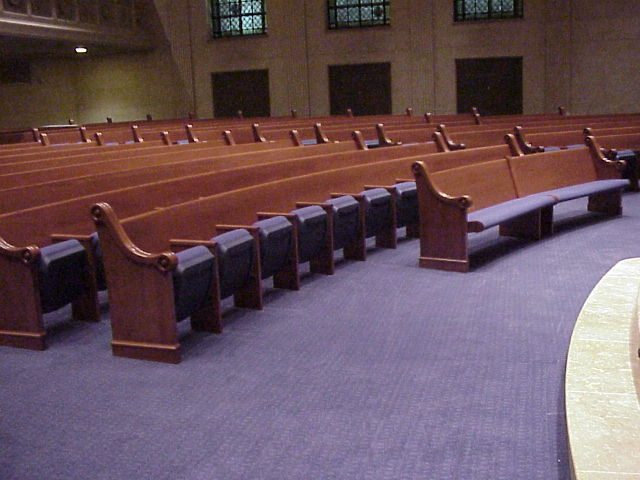
Traditional pews support a classic sanctuary atmosphere. They’re often preferred when the space includes architectural woodwork or colonial or traditional design elements.
Ergonomic Worship Seating Options
Ergonomic worship seating is becoming a top priority in modern sanctuary projects. Comfort matters for services, special programs, and weekly gatherings. Features like supportive seat angles and padded materials make a noticeable difference for guests.
Flexible Seating with Chairs
Flexible seating layouts are ideal for multi-purpose worship spaces. Stackable chairs make reconfiguration easier, and modular church furniture layouts can support special events, holiday services, or classroom-based gatherings.
Blended Layouts
A blended layout is one of the most trend-aligned outcomes in church seating procurement. Many facilities choose pews for the sanctuary center and chairs or benches for overflow and flexible zones. This keeps tradition intact while supporting long-term flexibility.
5) What Materials and Construction Methods Do We Need for Long-Term Value?
A thorough church pew buying checklist should always include a review of materials and construction. The most attractive seating isn’t always the best investment unless it’s built for durability.
Ask about these construction details:
- Solid oak pews or other hardwood chairs/benches
- Time testing joinery practices for long-lasting strength
- Durable support construction supporting horizontal movement, vertical support, and strengthening pew back against grabbing of back cap
- High-density foam or ergonomically shaped wood for worship seating comfort
- Polyester or polyester blend fabric for durability and easier upkeep
- No particleboard construction for reliable performance over time
These details also affect the cost of church pews and long-term maintenance. A church seating procurement plan that focuses on durability often results in a lower total cost over time.
6) What Key Specifications Are Needed Before Ordering?
Another step that should never be skipped in a church pew buying checklist is reviewing the final specs. These details impact daily comfort, appearance, and how well your layout functions.
Important specifications include:
- Seat width per person and total row length
- Seat height and back support for ergonomic worship seating
- Padded church pews vs. unpadded options
- Book racks, kneelers, and optional accessories
- End panel designs and custom wood finishes
This stage of church seating procurement is also the perfect time to ensure your finishes and furnishings match the overall style of the sanctuary renovation.
7) Do You Need Additional Worship Furniture Beyond Pews?
Many projects begin with church seating procurement but expand into larger sanctuary upgrades. Your church pew buying checklist may also include related items that support worship space planning and improve the complete room design.
Common additions include:
- Choir/clergy chairs and stools
- Communion tables, altar tables, or credence tables
- Pulpit furniture, ambos, lecterns, and podiums
- Auditorium seating or theater seating for multi-use spaces
- Synagogue items such as an Aron Kodesh, Torah arks, bimah furniture, and synagogue mechitza
Even if these furnishings aren’t part of your current church seating procurement budget, planning ahead helps keep the design cohesive.
8) Did You Remember to Put Church Furniture Installation into the Procurement Plan?
One of the most important service details in church seating procurement is installation. Church furniture installation involves more than unloading products—it often includes careful placement, alignment, anchoring, and protection of flooring and architectural details.
A strong church pew buying checklist should confirm:
- Delivery timing and installation scheduling
- Who handles assembly and anchoring
- How floors and surrounding woodwork are protected
- Communication for project planning and milestone updates
Reliable church furniture installation helps keep your schedule on track, especially during larger renovation periods.
9) How Can You Plan for Pew Maintenance Services and Long-Term Support?
Every church seating procurement plan should include long-term care. Pews and chairs will experience wear over time, especially in high-traffic worship spaces. Including maintenance services ensures your seating stays safe, comfortable, and visually consistent.
Consider whether support is available for:
- Pew maintenance services and cleaning guidelines
- Church furniture repair for loose joints or damage
- Pew refinishing or restoration
- Reupholstery for padded church pews
Including pew maintenance services from the start makes your church pew buying checklist more complete—and your investment more protected.
Move From Checklist to Installation with Confidence
As you finalize your church pew buying checklist, it helps to think about the basics like budget, layout, and what happens after delivery. However, other questions may arise relevant to your specific worship space’s needs.
The cost of church pews depends on your room size, materials, and comfort features, and professional church furniture installation can make the process smoother from start to finish. Planning ahead for pew maintenance services also protects your investment in the long term, keeping seating looking great and feeling comfortable for years.
When you’re ready to move forward with church seating procurement, New Holland Church Furniture offers Made in America pews and support services to help bring your vision for your worship space to life. Find your rep today to get started!